Lateral Ankle Pain Treatment

Tampa, FL

Lateral Ankle Pain Treatment in Tampa, FL: Causes, Treatment Options, and Recovery

Persistent ankle pain can make everyday activities, from walking around your neighborhood to exercising or playing sports, more difficult. When the pain affects the outside of your ankle, known as the lateral ankle, it may be related to a previous sprain, ligament damage, tendon injury, or chronic ankle instability.

If rest, ice, activity modification, and over-the-counter pain relievers have not provided sufficient relief, a professional evaluation can help identify the underlying cause and determine the next steps.

At AIRE Podiatry Studio in Tampa, FL, patients can explore individualized treatment options for lateral ankle pain, including conservative care, physical therapy, selected regenerative treatments, and surgery when clinically appropriate. Dr. Mona Ramani and Dr. Erin Koprince board certified podiatrist evaluates each patient’s symptoms, ankle structure, activity level, and treatment goals to develop a personalized care plan.

Whether you are experiencing recurring ankle sprains, discomfort while walking, or persistent pain after an injury, understanding your treatment options is an important first step toward improving ankle function and mobility.


What Is Lateral Ankle Pain Treatment?

Lateral ankle pain treatment refers to the medical approaches used to diagnose and manage pain affecting the outer side of the ankle. The appropriate treatment depends on the underlying cause, the severity of the injury, and whether the ankle has developed persistent instability or structural damage.

Common causes of lateral ankle pain include:

  • Lateral ankle sprains: Stretching or tearing of the ligaments that support the outside of the ankle.
  • Chronic ankle instability: Repeated episodes of the ankle giving way, often following one or more sprains.
  • Peroneal tendon injuries: Irritation, inflammation, or tears involving tendons that run along the outer ankle.
  • Cartilage or joint injuries: Damage that may cause persistent pain, swelling, or difficulty moving the ankle.
  • Bone abnormalities or fractures: Structural problems that may require targeted treatment.

At AIRE Podiatry Studio in Tampa, treatment recommendations are based on an evaluation of your symptoms and the structures contributing to your discomfort.

Depending on your diagnosis, your care plan may include bracing, activity modification, physical therapy, medication when appropriate, or other nonsurgical interventions. Selected patients may also be candidates for injection-based treatments. Surgery may be considered when significant structural damage or persistent instability does not respond adequately to conservative care.

A healthcare provider in maroon scrubs stands beside a patient lying on a gray exam table. The patient, wearing a surgical gown and cap, smiles up at Dr. Koprince and Dr. Ramani is seen smiling in he background. - Hammer Toes in New York, NY

What Are the Benefits of Lateral Ankle Pain Treatment?

Appropriate treatment can help reduce pain, improve ankle stability, and restore function. Addressing the underlying cause may also help reduce the likelihood of recurring injuries in patients with chronic ankle instability.

Depending on your diagnosis and treatment plan, potential benefits may include:

  • Reduced ankle pain: Targeted treatment can help manage discomfort during daily activities.
  • Improved stability: Treatment for ligament injuries may help reduce episodes of the ankle giving way.
  • Better mobility and range of motion: Rehabilitation can improve flexibility, strength, and movement.
  • Improved physical function: A structured treatment plan can help you work toward returning to exercise, sports, and other activities.
  • Reduced risk of recurrent injury: Appropriate rehabilitation and, when indicated, surgical stabilization may help address factors contributing to repeated sprains.

Which Treatments May Be Recommended?

Your treatment plan will depend on the source and severity of your ankle pain.

Nonsurgical treatment: Options may include bracing, activity modification, physical therapy, and medication when appropriate. These approaches are often considered before surgery, depending on the injury.

Injection-based treatments: Platelet-rich plasma (PRP) and certain regenerative medicine approaches may be discussed for selected conditions. Their evidence, effectiveness, and suitability vary by diagnosis, so they should not be considered guaranteed solutions.

Lateral ankle stabilization surgery: This procedure may be considered for chronic ankle instability when damaged ligaments cause repeated ankle giving-way episodes and nonsurgical treatment has not provided sufficient improvement.

Ankle arthroscopy: This minimally invasive surgical technique uses a small camera and specialized instruments to evaluate and treat certain problems inside the ankle joint, such as selected cartilage injuries or inflamed tissue.

The goal is to select the least invasive appropriate treatment while addressing the underlying problem.

Who Is a Good Candidate for Lateral Ankle Pain Treatment in Tampa?

You may benefit from an evaluation for lateral ankle pain treatment if you experience:

  • Persistent pain or tenderness along the outside of your ankle.
  • Swelling or discomfort that continues after an ankle sprain.
  • Repeated ankle sprains or a sensation that your ankle is giving way.
  • Pain during walking, running, exercise, or other weight-bearing activities.
  • Symptoms that have not improved sufficiently with rest, bracing, or physical therapy.
  • Suspected ligament, tendon, cartilage, or other structural damage.

You do not necessarily need surgery to benefit from treatment. Many ankle injuries can be managed with conservative care, while others require more advanced intervention.

A consultation at AIRE Podiatry Studio in Tampa can help determine the likely cause of your symptoms and whether nonsurgical treatment, additional diagnostic testing, or a surgical approach may be appropriate.

What Is the First Step in Treating Lateral Ankle Pain?

The first step is to schedule a consultation with Dr. Mona Ramani or Dr Erin Koprince at AIRE Podiatry Studio’s Tampa office.

During your appointment, your evaluation may include the following:

  1. Medical history review: Discuss previous ankle injuries, current symptoms, activity levels, and treatments you have already tried.
  2. Physical examination: Assess tenderness, swelling, range of motion, ankle strength, ligament stability, and walking mechanics.
  3. Diagnostic imaging, if indicated: X-rays or other imaging studies may be recommended to evaluate bones, joints, ligaments, tendons, or cartilage.
  4. Personalized treatment recommendations: Review the available options based on your diagnosis, functional needs, and recovery goals.

Following the evaluation, Dr. Ramani can discuss the potential benefits, limitations, and risks of the recommended treatments. If surgery is appropriate, you will also receive information about preparation, postoperative care, and rehabilitation.

The objective is to help you make an informed decision about your ankle health.

What to Expect During Lateral Ankle Pain Treatment

Your experience will depend on the type of treatment recommended for your condition.

Nonsurgical Treatment

Nonsurgical care may involve a combination of physical therapy, bracing, activity modification, and other measures to manage symptoms and improve ankle function.

Physical therapy may focus on strengthening the muscles that support your ankle, improving balance, restoring range of motion, and addressing movement patterns that contribute to instability.

If an injection-based treatment is recommended, your provider will explain the procedure, expected recovery, potential benefits, and relevant risks before proceeding.

Surgical Treatment

If your ankle pain is related to structural damage or chronic instability that has not responded adequately to conservative treatment, surgery may be considered.

The specific procedure depends on the problem being addressed. Ankle arthroscopy uses small incisions, a camera, and specialized instruments to treat certain joint conditions. Ligament repair or reconstruction may be recommended for selected patients with persistent ankle instability.

Anesthesia, surgical preparation, postoperative restrictions, and recovery requirements will vary by procedure.

Before treatment, your care team will explain what to expect and provide instructions tailored to your individual needs.

child (4)
child_expect

Lateral Ankle Pain Treatment and Recovery

Recovery from lateral ankle pain treatment in Tampa varies according to the diagnosis, treatment method, severity of the injury, and individual healing process.

Recovery After Nonsurgical Treatment

Patients receiving conservative treatment may be able to continue many daily activities while modifying movements that aggravate their symptoms. Bracing or other forms of support may be recommended, and physical therapy can help rebuild strength, balance, and ankle control.

Recovery timelines vary. Some patients improve over several weeks, while more persistent injuries may require a longer course of treatment and rehabilitation.

Recovery After Ankle Surgery

Surgical recovery typically involves more structured restrictions and follow-up care. Depending on the procedure, you may need a walking boot, brace, crutches, or a temporary period of limited or no weight-bearing.

Physical therapy may be introduced at an appropriate stage to help restore strength, flexibility, balance, and mobility.

Some patients return to light daily activities within weeks, while recovery after ligament reconstruction or other complex procedures may take several months. Returning to running, jumping, or competitive sports generally requires additional assessment and clearance.

At AIRE Podiatry Studio, follow-up appointments help monitor your progress and guide adjustments to your recovery plan. Following your postoperative instructions and rehabilitation program is important for supporting a safe recovery.

How Much Does Lateral Ankle Pain Treatment Cost in Tampa, FL?

The cost of lateral ankle pain treatment in Tampa depends on your diagnosis, the type of care recommended, and whether treatment involves conservative management, injections, diagnostic imaging, or surgery.

Factors that may influence the total cost include:

  • Initial consultation and diagnostic testing.
  • The type and complexity of treatment.
  • Facility, anesthesia, and surgical fees, when applicable.
  • Bracing, medical supplies, or postoperative equipment.
  • Physical therapy and follow-up appointments.
  • Insurance coverage, deductibles, and copayments.

Some medically necessary ankle treatments may be covered by health insurance, depending on your plan and the specific service. Coverage for regenerative treatments, including PRP, may differ and is not guaranteed.

For an accurate estimate, schedule a consultation with AIRE Podiatry Studio in Tampa. Your care team can explain the recommended treatment and help clarify anticipated costs and insurance considerations.

- Tenax for Tendonitis in New York, NY

Why Choose AIRE Podiatry Studio for Lateral Ankle Pain Treatment in Tampa?

Choosing a provider for persistent ankle pain involves more than finding temporary symptom relief. It is important to identify the underlying problem and understand the available treatment options.

At AIRE Podiatry Studio in Tampa, patients can receive an individualized evaluation and treatment recommendations based on their symptoms, ankle structure, activity level, and recovery goals.

Dr. Mona Ramani focuses on assessing foot and ankle conditions and discussing appropriate treatment approaches, which may include conservative care, rehabilitation, or surgery when indicated.

Your treatment plan may be designed to address:

  • The underlying cause of your lateral ankle pain.
  • Ligament instability and recurring ankle sprains.
  • Tendon or joint problems affecting ankle function.
  • Strength, balance, mobility, and rehabilitation needs.
  • Strategies for reducing the risk of future ankle injuries.

The practice’s goal is to help patients understand their condition, make informed decisions, and work toward improved mobility and function through appropriate, individualized care.

If you are experiencing persistent outer ankle pain, an evaluation can help clarify the cause and identify the next steps.

home (16)
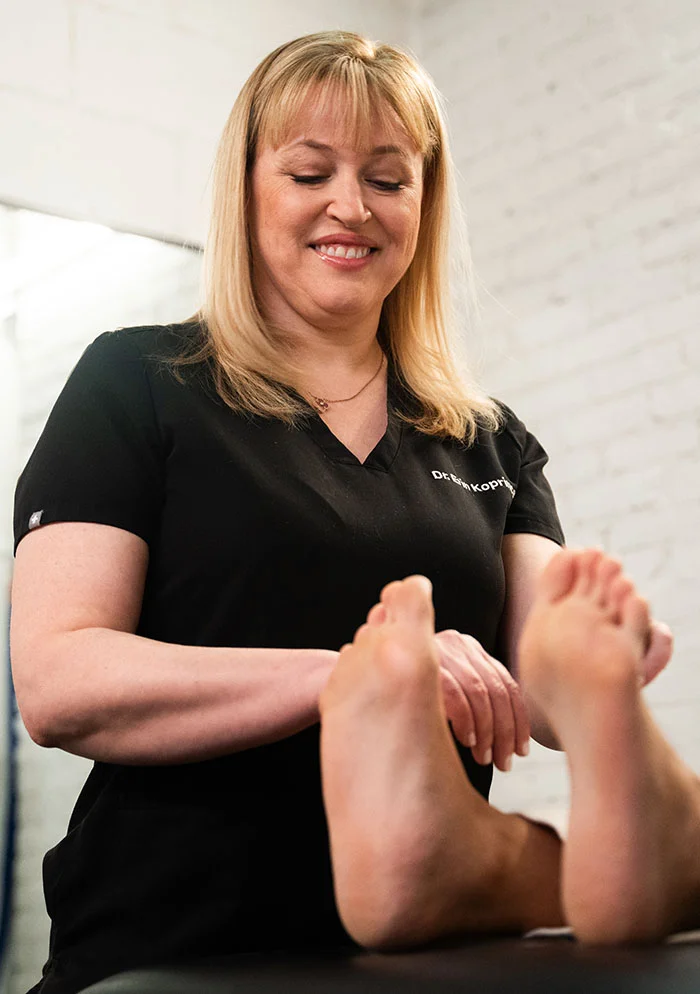
Dr. Ramani, a podiatrist, examining a patient's feet in a clinical setting, focusing on health and care. - Microdrill for Fungal Nail in New York, NY

Schedule a Lateral Ankle Pain Consultation in Tampa, FL

Living with persistent ankle pain can interfere with work, exercise, and everyday activities. You do not have to guess whether your symptoms require conservative treatment, additional testing, or a surgical evaluation.

At AIRE Podiatry Studio in Tampa, Dr. Mona Ramani can evaluate your ankle, discuss potential causes of your symptoms, and help you understand your treatment options.

Contact AIRE Podiatry Studio to schedule a consultation for lateral ankle pain in Tampa, FL. Take the next step toward understanding your ankle condition and developing a treatment plan tailored to your needs.

Lateral Ankle Pain Treatment FAQ’S

home (16)

Align. Integrate. Restore. Evolve.

Schedule a Consultation

Call Text Email Location